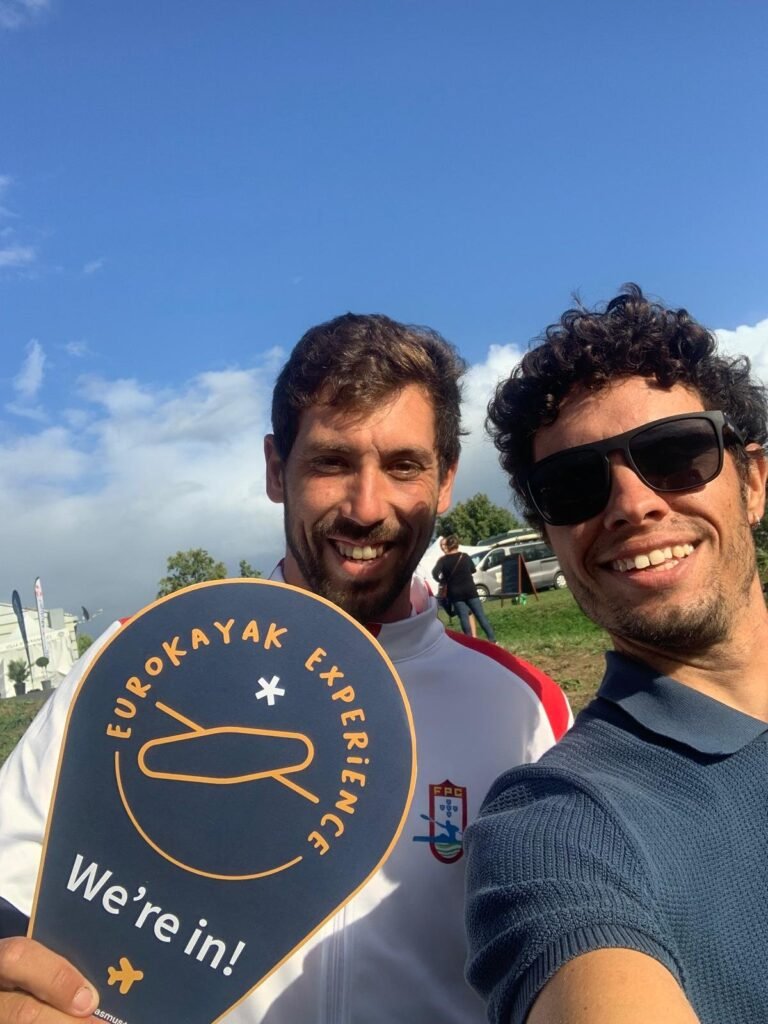
From Five Clubs to Thirty-Three
Before there was a program spanning fifteen countries, there was one man, a DIN A3 map of Europe spread across a table, and months of phone calls that mostly led nowhere at all.
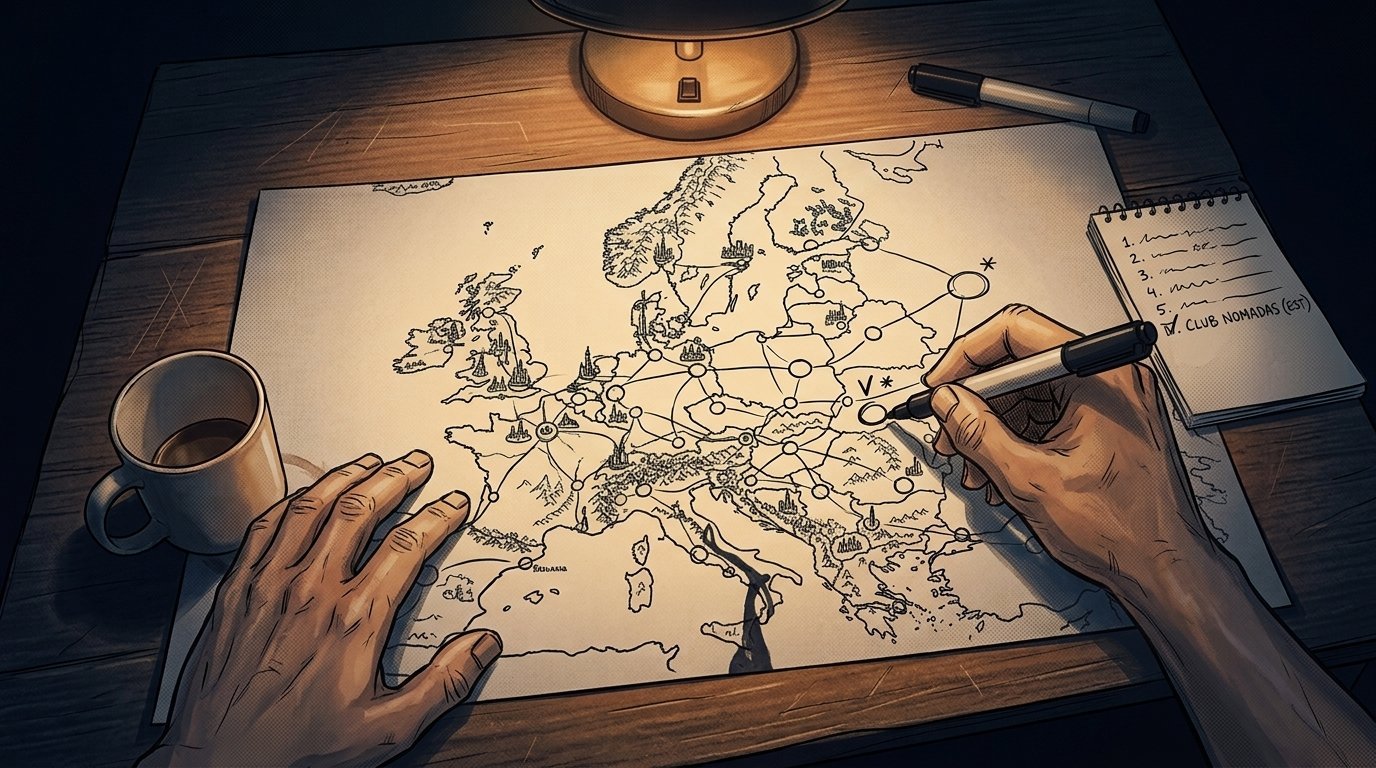
By May 2025, Telmo was making calls and sending messages to kayak polo clubs across Europe with a proposal that had no track record behind it yet — just an idea, some paperwork, and a conviction he couldn’t fully explain to himself, let alone to a stranger picking up the phone. He called the first months exactly what they were: sowing. Conversation after conversation, most of them leading nowhere anyone could point to.
The first club to trust the idea completely was in Prague — a story worth telling properly on its own, later. For now, what matters is that it happened at all: someone Telmo had never met, in a country he’d never visited, said yes to a project that existed mostly on paper.

After Prague came Coimbra, then Portimão — both in Portugal — then a club in France, then Katowice, in Poland. Five clubs, five different countries, each one a separate leap of faith from someone Telmo had mostly only spoken to through a screen or a phone line.
Reaching the fifth club, Telmo let himself think something he’d been avoiding: maybe this could grow to nine. The most he’d ever dared imagine, even on his best days, was somewhere around fifteen. Five down, on a short list on the corner of his desk — nobody was thinking about thirty-three yet.
We never imagined the first year would end with thirty-three clubs in fifteen countries.
Somewhere past the first ten, the challenge stopped being about finding clubs and became about arranging them well. The project paired clubs in groups of three for each exchange, and thirty-plus clubs meant real decisions: who travels together, who plays whom, whose trip actually teaches them something new.
Telmo drew a map of Europe on a sheet of DIN A3 paper and started grouping — comparing it, more than once, to seating a wedding: who sits with whom, who gets along, who’s too close to be interesting and who’s too far to be practical. Country, distance, the shape of the trip itself, the age and gender balance of each group, how one club’s style of play might sharpen another’s — all of it went onto the same sheet of paper.
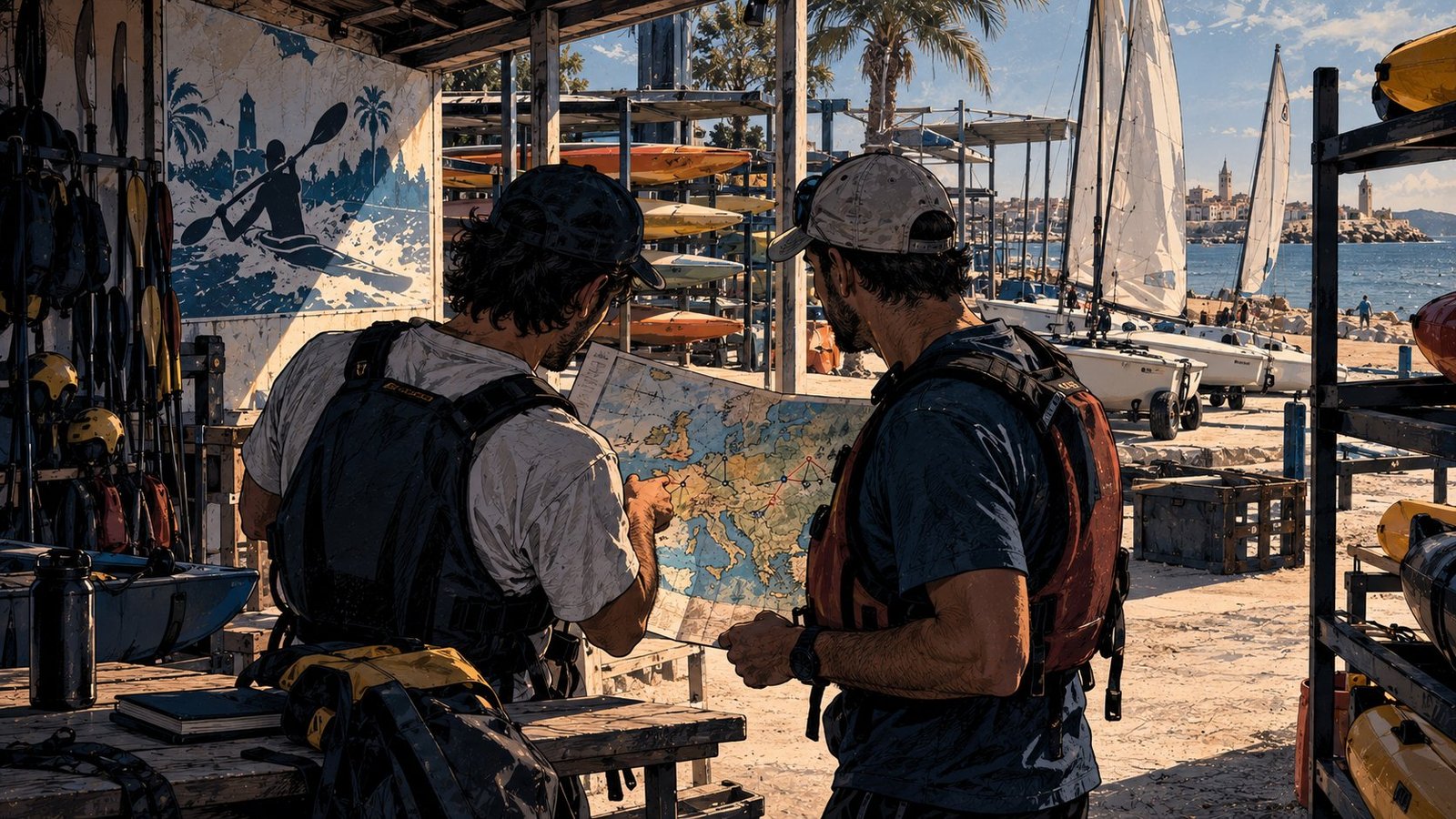
He carried that map to work — to the Escola de la Mar de Burriana, where he also teaches kayaking and sailing — and asked around before settling on anything. At home, he crossed out groupings that didn’t sit right and kept the ones that did. Then he brought the final version to Carlos, who reviewed it and signed off. By February 2026, the sheet of paper had become something real: thirty-three clubs, fifteen countries, eleven groups of three — each one, they hoped, worth the trust it had taken to get there.